Creating Workplaces Where People Want to Work
The role of the workplace is being redefined. Across industries, organizations are asking a fundamental question: what should an office represent in the future of work? Increasingly, the answer is clear. The office is no longer simply a location for tasks. It is an environment where collaboration must happen naturally, ideas evolve through conversations, and culture becomes visible in everyday interactions.
Research increasingly supports this shift. According to workplace studies by global consulting firms, over 70% of employees say in-person collaboration improves innovation and decision-making, particularly for complex work that requires discussion and creativity.
For organizations building for the future, the office cannot remain static. It must evolve into a dynamic experience ecosystem designed around how people work best. Above all, it prompts a deeper question: if organizations truly believe in a people-first culture, how should the workplace itself reflect that commitment?
The Six Pillars of a Framework for a Future-Ready Workplace
Health and Well-Being
If organizations truly care about their people, that care must be visible in the environments they create. Studies by the Harvard T.H. Chan School of Public Health show that better indoor air quality and natural lighting can improve cognitive performance by up to 61%. Similarly, ergonomic workspaces significantly reduce physical strain and fatigue during long work hours.
These insights reinforce a simple idea: the workplace must actively support employee well-being. Designing with this principle in mind means creating environments that prioritize ergonomic workstations, clean indoor air, balanced temperature control, access to natural light, and spaces where employees can pause and recharge.
When health becomes a design priority, productivity and energy naturally follow.
Collaboration and Technology
While individual work can happen anywhere, collaboration thrives when people come together. Research from MIT Sloan and Gartner suggests that organizations with strong in-person collaboration environments see significantly higher levels of knowledge sharing and faster decision cycles.
Modern workplaces, therefore, prioritize spaces that make collaboration seamless.
Open collaboration zones enable spontaneous conversations that often spark new ideas. Technology-enabled meeting rooms ensure that teams across geographies remain fully connected. Monitors and digital tools at workstations help employees work efficiently and transition smoothly between individual and team tasks.
The office becomes a place where conversations move ideas forward.
Safety and Inclusion
A workplace must first and foremost make people feel safe, comfortable, and included. According to global workplace design studies, employees are significantly more engaged when their work environment is accessible, thoughtfully structured, and easy to navigate.
Designing for safety and inclusion, therefore, means more than compliance. It means ensuring clear movement pathways, safety infrastructure aligned with modern standards, accessible layouts, and intuitive navigation across the workspace.
When workplaces are inclusive by design, they foster a stronger sense of belonging.
Accessibility and Connectivity
One of the most overlooked elements of workplace design is commuting convenience. Studies across major cities show that shorter and more predictable commute options significantly improve employee satisfaction and punctuality.
Thoughtfully located offices with walkable metro access, shuttle connectivity, proximity to expressways, and sufficient parking reduce daily friction for employees. These factors make the workplace easier to reach and integrate seamlessly into everyday routines.
Convenience, in many ways, becomes an important part of the overall employee experience.
Experience and Engagement
The best workplaces understand that productivity is closely connected to balance. As we go through engaging workdays with numerous intense conversations and deliverables, short breaks can help restore focus and energy. According to global workplace experience research, organizations that provide spaces for relaxation, social interaction, and informal engagement see higher employee satisfaction and stronger workplace culture.
Amenities that allow employees to step away, recharge, and interact informally contribute to a healthier work rhythm. Spaces designed for both work and rejuvenation transform the office into a place where employees can remain energized throughout the day.
Extended Workplace Recreation
As the workday becomes longer and more cognitively demanding, workplaces must also support moments of recovery. Extended recreation facilities play an important role in helping employees reset, decompress, and sustain energy through the latter part of the day.
Beyond individual well-being, these spaces also encourage informal interaction, stronger team bonding, and a more engaging in-office experience. In that sense, recreation is not separate from work—it is part of creating a workplace where people can perform consistently and stay connected over time.
From Infrastructure to Experience
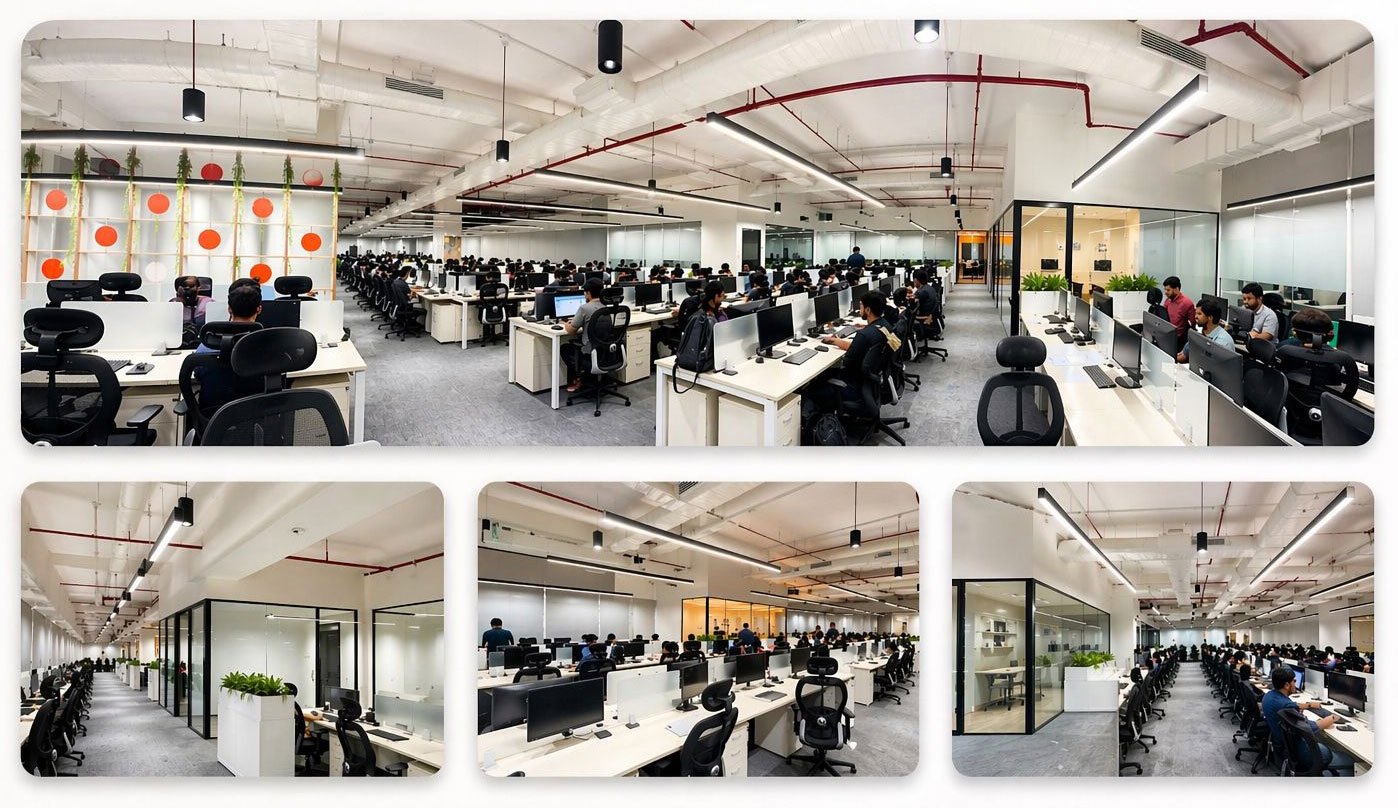
Workplace design today is no longer about square footage. It is about creating environments that enable people to perform at their best.
Organizations that invest in thoughtful workplace design are not simply building offices; they are building ecosystems that support collaboration, well-being, and innovation.
When workplaces align with how people naturally work, they become places employees value being part of.
Looking Ahead
As the future of work continues to evolve, one principle remains clear: workplaces must evolve alongside the people they serve.
Organizations that view workplace design strategically—balancing sustainability, collaboration, technology, and human experience—will be better positioned to build stronger teams, stronger cultures, and stronger outcomes.
Because ultimately, the most successful workplaces are not defined by buildings, but by the environment they create for people to connect, contribute, and grow.